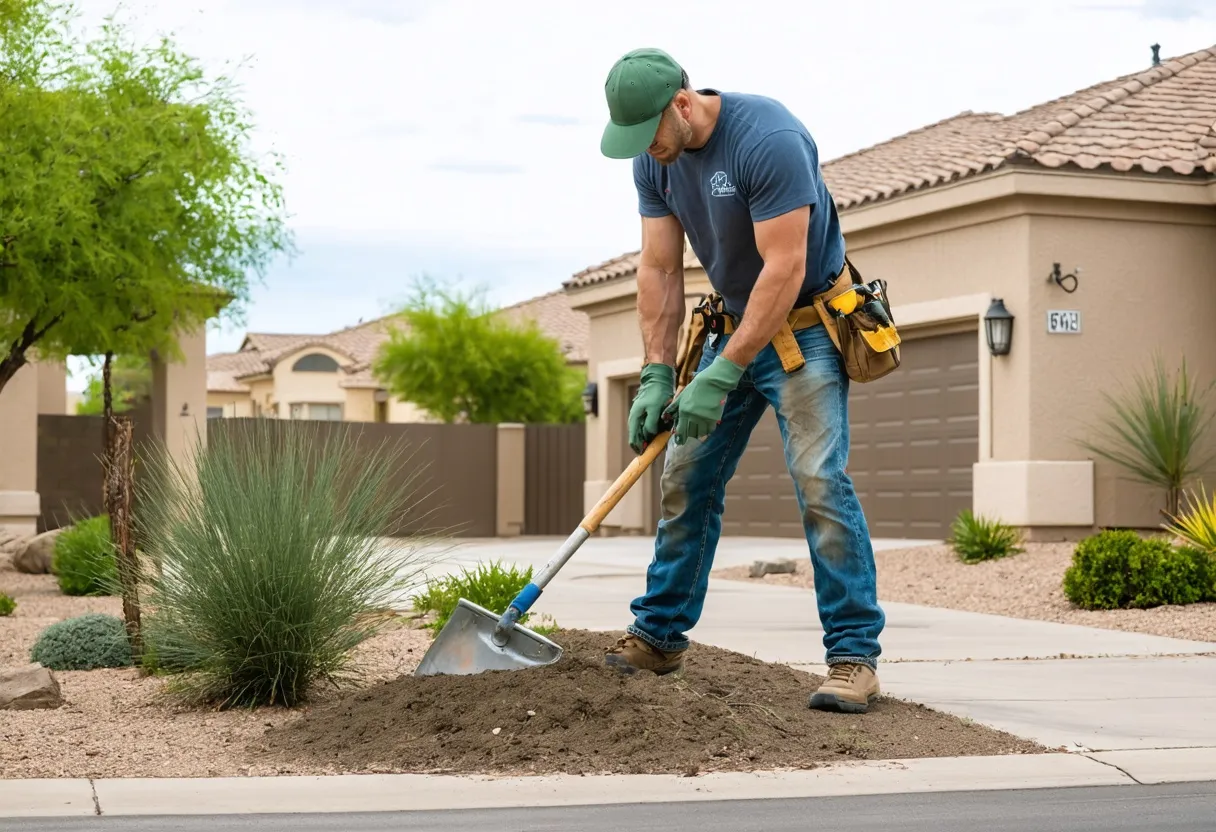
Gilbert's summers don't leave much room for a thirsty lawn. When July highs sit near 110°F and the water bill arrives, most homeowners start asking the same question: how much yard can I convert to something that actually thrives here instead of fighting the climate? Xeriscaping in Gilbert, AZ is the answer for a growing number of properties across the valley, and it's less about gravel-and-cactus minimalism than most people expect. Done well, drought-tolerant landscaping blends texture, color, and shade into a yard that looks intentional in every season and needs a fraction of the water and mowing a turf lawn demands.
This page walks through what xeriscaping and desert landscape design actually include in Gilbert, how the design-build process works from first conversation to finished install, what drives pricing, and the mistakes that turn a promising desert yard into a maintenance headache. If you want the full cost breakdown by project type, our landscaping pricing guide for Gilbert homeowners lays out the ranges and the variables that move them.
What Xeriscaping and Desert Landscape Design Actually Include
Xeriscaping isn't just "remove the lawn and add rock." A properly designed desert landscape is a system: soil prep, grading, plant zones grouped by water need, drip irrigation, decomposed granite or rock groundcover, and hardscape elements that anchor the design. In Gilbert, that typically means:
- Turf removal and soil grading so water drains away from the foundation instead of pooling near stem walls and pool decking, which is a real problem after monsoon downpours.
- Native and adapted plant selection — Texas sage, red yucca, desert marigold, agave, and Palo Verde or Desert Willow trees for shade, chosen and grouped by how much water each actually needs (hydrozoning).
- Decomposed granite or rock groundcover in colors that complement the home's stucco and roofline rather than a generic gray blanket.
- Drip irrigation on a dedicated zone or valve, separate from turf or garden zones, sized to the plant palette instead of a one-size-fits-all schedule.
- Boulders, cobble dry-creek beds, and steel or paver edging to define planting beds and manage stormwater during monsoon season.
- Artificial turf accents in play areas or pet zones for homeowners who want a patch of green without the water bill of a full lawn.
The goal is a yard that reads as designed, not abandoned — one that holds its color through a Gilbert summer and doesn't need a mow-and-blow crew every week.
Why Gilbert Homeowners Are Switching to Drought-Tolerant Landscaping
Demand for desert xeriscaping and artificial turf has climbed steadily across the East Valley as water costs rise and turf maintenance becomes harder to justify in a desert climate. A handful of factors are specific to this market:
- Extreme summer heat stresses cool-season turf badly enough that many lawns go dormant or die back by August regardless of how much they're watered — the plant just isn't built for a Sonoran Desert summer.
- Water restrictions and rising utility rates make a grass lawn one of the most expensive things to maintain on a residential property here.
- Monsoon season brings intense, short bursts of rain that can erode poorly graded yards, so drainage-smart hardscape and groundcover matter as much as plant choice.
- HOA and curb-appeal expectations in newer Gilbert communities increasingly favor clean desert landscape design over traditional grass, which pushes resale value in the right direction rather than against it.
Switching to a xeriscape isn't just a water-saving move — it's a maintenance-reduction move. Once established, drought-tolerant plantings need occasional pruning and a functioning drip system, not weekly mowing, edging, and fertilizing.
How the Design-Build Process Works
A xeriscape conversion or new desert landscape install generally moves through four stages. Understanding them up front helps you know what to expect and when to ask questions.
1. Envision — The Consultation Walkthrough
This is a walk of your property to talk through how you actually use the space: where kids or pets play, which windows get the harshest afternoon sun, whether you want turf accents, a fire feature, or just low-maintenance curb appeal. Existing irrigation, drainage patterns, and any monsoon runoff issues get flagged here, since they shape everything downstream.
2. Design — Plant Palette and Layout
This stage turns the walkthrough into a real plan: a layout showing hardscape placement, plant groupings by water zone, groundcover boundaries, and irrigation routing. Good desert landscape design accounts for mature plant size — a Palo Verde planted three feet from a window looks fine at install and becomes a problem in five years. This is also where you lock in material choices (granite color, boulder size, edging type) before anything is ordered.
3. Construction — Installation
Turf and old irrigation get removed, soil is graded for proper drainage, drip lines are laid and pressure-tested, plants go in at correct spacing, and groundcover is placed to finished grade. Sequencing matters here — irrigation always goes in before groundcover, not after, so lines aren't disturbed later. For homes near the Gilbert irrigation systems we install and service, this is also when we tie the new drip zones into a smart controller so watering adjusts automatically as seasons change.
4. Maintenance — Establishment and Beyond
Desert-adapted plants still need regular water for their first one to two growing seasons while root systems establish. A brief maintenance plan during that window — checking drip emitters, adjusting run times, spot-watering through the first monsoon and first full summer — is what separates a xeriscape that thrives from one that limps along. After establishment, upkeep drops to occasional pruning, emitter checks, and seasonal cleanup.
Service Area: Gilbert and the Surrounding East Valley
Our xeriscaping and desert landscape design work covers Gilbert broadly, including neighborhoods around the 85295 zip code and the E Pecos Rd corridor, along with nearby communities in Queen Creek, San Tan Valley, and Chandler. Soil composition, HOA landscaping rules, and monsoon drainage patterns shift somewhat from one part of the East Valley to another, so a design that works well in one neighborhood isn't automatically right for the next — site-specific grading and plant selection matter more than a generic template.
Beyond Xeriscaping: Related Services That Complete a Desert Yard
Most Gilbert xeriscape projects don't happen in isolation — they're usually paired with one or more of the following, and bundling them into one design-build process avoids the disconnected look of a yard that was upgraded piecemeal over several years.
Artificial Turf Installation
Synthetic turf gives you a green, usable play or pet area without the water demand of natural grass. In a xeriscape, turf is usually used as an accent — a rectangle for the kids or dog rather than wall-to-wall coverage — with proper base compaction and drainage underneath so it doesn't pool or shift after monsoon rain.
Hardscape and Paver Installation
Pavers, flagstone, and poured concrete define patios, walkways, and seating areas within a desert landscape. Hardscape also does functional work in Gilbert's climate: directing stormwater away from the foundation and giving you usable outdoor space that doesn't heat-soak and radiate the way plain concrete does.
Irrigation Systems
Drip irrigation is the backbone of a healthy xeriscape — it delivers water directly to root zones with minimal evaporation, unlike spray irrigation built for turf. See our dedicated page on irrigation system design and repair in Gilbert for how zoning, smart controllers, and seasonal adjustments work together to keep a desert landscape alive without overwatering it.
Outdoor Lighting
Low-voltage path and accent lighting extends the usable hours of a desert yard into the evening, when Gilbert temperatures actually become pleasant. Uplighting on a Palo Verde or Desert Willow also does double duty as a design feature after dark.
Fire Pits and Outdoor Kitchens
Evening temperatures drop enough in fall, winter, and spring that outdoor living space gets real use in Gilbert. A fire pit or built-in outdoor kitchen integrated into the hardscape plan turns a desert yard into an entertaining space, not just a low-maintenance one.
Tree Services
Shade is one of the highest-value additions to any desert yard — it drops surface temperatures around the home and shrinks cooling costs. Tree services here cover proper selection (species that won't outgrow their planting site or drop excessive litter), correct planting depth, and structural pruning as trees like Palo Verde and Desert Willow mature.
Heat Tolerance and Monsoon Prep
Two climate realities shape every desert landscape design decision in Gilbert: extreme summer heat and monsoon season. They pull in different directions, and a good design accounts for both.
- Heat tolerance means selecting plants proven to hold up through sustained 110°F+ stretches without dropping leaves or dying back, and grouping them so high-water plants aren't sharing a zone with true xeric species that will be overwatered as a result.
- Monsoon prep means grading and drainage that can handle a fast, heavy downpour without eroding groundcover or pushing water toward the house. Dry creek beds, properly compacted decomposed granite, and correctly sloped grading all reduce monsoon damage.
- Wind resistance matters for tree staking and boulder placement — monsoon microbursts can snap poorly staked young trees or shift lightweight groundcover.
- Irrigation timing should shift with the season — reduced run times during monsoon rainfall and increased frequency during peak summer heat, ideally automated through a smart controller rather than left on a fixed year-round schedule.
A xeriscape designed without these two factors in mind tends to look great for one season and then struggle — either scorched by August or eroded by the first real monsoon storm.
What Affects the Cost of a Xeriscape Project
Every yard is different, and we won't quote a number without seeing the site, but the variables that move pricing up or down are consistent:
- Turf removal scope — how much existing grass, old irrigation, and soil amendment needs to be removed before the new design goes in.
- Grading and drainage complexity — yards with drainage problems or slope issues toward the home need more site work before planting begins.
- Plant palette and sizing — 5-gallon shrubs cost less than 24-inch box trees, and denser plantings cost more than a sparser, rock-forward layout.
- Groundcover material and depth — decomposed granite pricing varies by color and source, and proper depth affects both look and weed suppression.
- Hardscape and add-ons — pavers, boulders, fire pits, and lighting are priced separately from the core planting and irrigation work.
- Irrigation scope — tying into existing irrigation valves costs less than installing new zones and a controller from scratch.
For actual ranges by project type and yard size, our Gilbert landscaping pricing guide breaks down what drives cost on xeriscaping, turf, hardscape, and irrigation projects specifically, so you can budget before you ever request a quote.
Common Xeriscaping Mistakes to Avoid
We see the same avoidable problems on properties that hired the wrong crew or tried a DIY approach:
- Skipping soil grading — laying groundcover over unleveled soil looks fine until the first monsoon, when water pools instead of draining away from the home.
- One irrigation zone for everything — mixing high-water and true xeric plants on the same drip schedule overwaters some and starves others.
- Planting too close to structures — not accounting for a tree or agave's mature spread leads to costly removal or pruning fights a few years later.
- Groundcover with no weed barrier or insufficient depth — leads to weeds pushing through within a season and a yard that looks neglected fast.
- No maintenance plan during establishment — even drought-tolerant plants need consistent water for their first one to two seasons; skip this and plant mortality climbs.
Choosing a Xeriscaping Contractor in Gilbert
Because desert landscape design blends horticulture, drainage engineering, and irrigation know-how, the contractor you choose matters more than it would for a simple sod install. Look for an owner-operated crew that will walk your specific site rather than quoting from a phone call, that designs irrigation zoning around your actual plant palette instead of reusing a generic drip layout, and that's transparent about what drives your price up or down instead of giving a vague flat number. Competitive, honest pricing shouldn't mean the cheapest bid — it should mean you understand exactly what you're paying for and why, which is the whole idea behind publishing our pricing guide instead of keeping cost factors behind a sales call.
Ask to see completed projects in your area, not just stock photography — a contractor who has actually installed desert landscapes in Gilbert's soil and climate will have real examples of turf-to-xeriscape conversions, drainage fixes, and established plantings a year or two out, not just day-of-install photos.
Frequently Asked Questions
It varies by design, but drip-irrigated desert plantings use dramatically less water than a turf lawn because water goes directly to root zones instead of being sprayed across a surface that partially evaporates in Gilbert heat. The bigger savings usually come from eliminating the weekly deep watering a lawn needs just to survive summer.
Not if it's designed well. A good desert landscape design layers texture and color — flowering perennials like desert marigold, structural plants like agave and red yucca, shade trees like Palo Verde or Desert Willow, and groundcover as the connective layer rather than the whole show. Turf accents and hardscape add further variation.
Timeline depends on yard size and scope — a small front-yard conversion moves faster than a full front-and-back redesign with hardscape and irrigation rework. Turf removal, grading, irrigation, planting, and groundcover placement each take dedicated time, and we'll give you a realistic schedule during the design stage rather than a guess.
Yes, especially during establishment. Newly planted desert species need regular watering for roughly their first one to two growing seasons before their root systems are developed enough to rely on infrequent deep watering. Skipping this step is one of the most common reasons DIY xeriscapes fail.
Absolutely. Many Gilbert homeowners phase the project — converting the front yard first, or keeping a small turf or artificial turf area for kids or pets while xeriscaping the rest. This is worth discussing at the consultation stage since it affects irrigation zoning.
Proper grading and drainage design are built into the install specifically to handle monsoon downpours, but a freshly planted xeriscape benefits from a quick post-storm check during its first season to confirm groundcover hasn't shifted and drip emitters are still clear of debris.
Ready to Redesign Your Gilbert Yard?
If your lawn is losing the fight against Gilbert summers, a well-designed xeriscape can cut your water use, cut your maintenance time, and still give you a yard that looks deliberate year-round. Browse our full range of services on the Landscaping Gilbert home page, check our landscaping FAQ for more answers on process and timelines, or reach out directly through our contact and consultation request page to schedule a walkthrough of your property and get a design built around how you actually want to use your yard.